When vetting a custom home builder for a lake home, moisture management should be a top priority from the very beginning. Building on a lake, such as Lake Lanier, is a significant investment, and it is one that should be done right the first time. While many homeowners focus on views, layout, and luxury finishes, the long term performance of the home is just as important as it will have an impact on indoor air quality, durability, and comfort. A well designed lake home should not only enhance your lifestyle, but also be built to handle the environmental challenges that come with living near the water.
Moisture is the greatest enemy to any home, and that risk becomes even more pronounced when building near a lake. In Georgia, the climate already experiences high relative humidity for much of the year. When you combine that with close proximity to a large body of water like Lake Lanier, humidity levels can increase even further.
As temperatures rise, evaporation from the lake adds additional moisture to the surrounding air. This means homes built along the shoreline are constantly exposed to higher levels of humidity compared to homes located further inland. During rainy periods or seasonal transitions, especially from summer to fall, moisture conditions can become even more challenging as the air struggles to hold excess humidity.
Without proper planning, these conditions can lead to uncomfortable indoor environments, added strain on mechanical systems, and long term issues such as mold growth, material deterioration, and poor indoor air quality. Once relative humidity reaches around 65 percent, there is enough moisture in the air for mold to begin developing, often in areas that are not easily visible. As mold grows, it releases spores that can circulate throughout the home, impacting air quality and potentially causing allergic reactions, skin irritation, coughing, sneezing, and other health concerns.
Homes built near lakes are exposed to a unique set of environmental conditions that must be addressed through thoughtful design and construction. The constant presence of moisture in the air requires a more advanced approach to moisture management than a typical home. While the core principles remain similar, lake homes demand a more refined approach to ventilation, heating, cooling, dehumidification, and overall moisture control to ensure long term comfort and performance.
A high performance lake home is designed to control how air and moisture move in and out of the structure. Without this level of control, humid air can infiltrate the home, leading to elevated indoor humidity levels that affect both comfort and durability. The goal is not just to build a beautiful home, but to create one that performs consistently well throughout the year.
At Ensign Luxury Homes, we take a building science driven approach to every lake home we build. This means we consider how moisture, air, and temperature interact with the home and implement strategies that prevent problems before they ever begin.
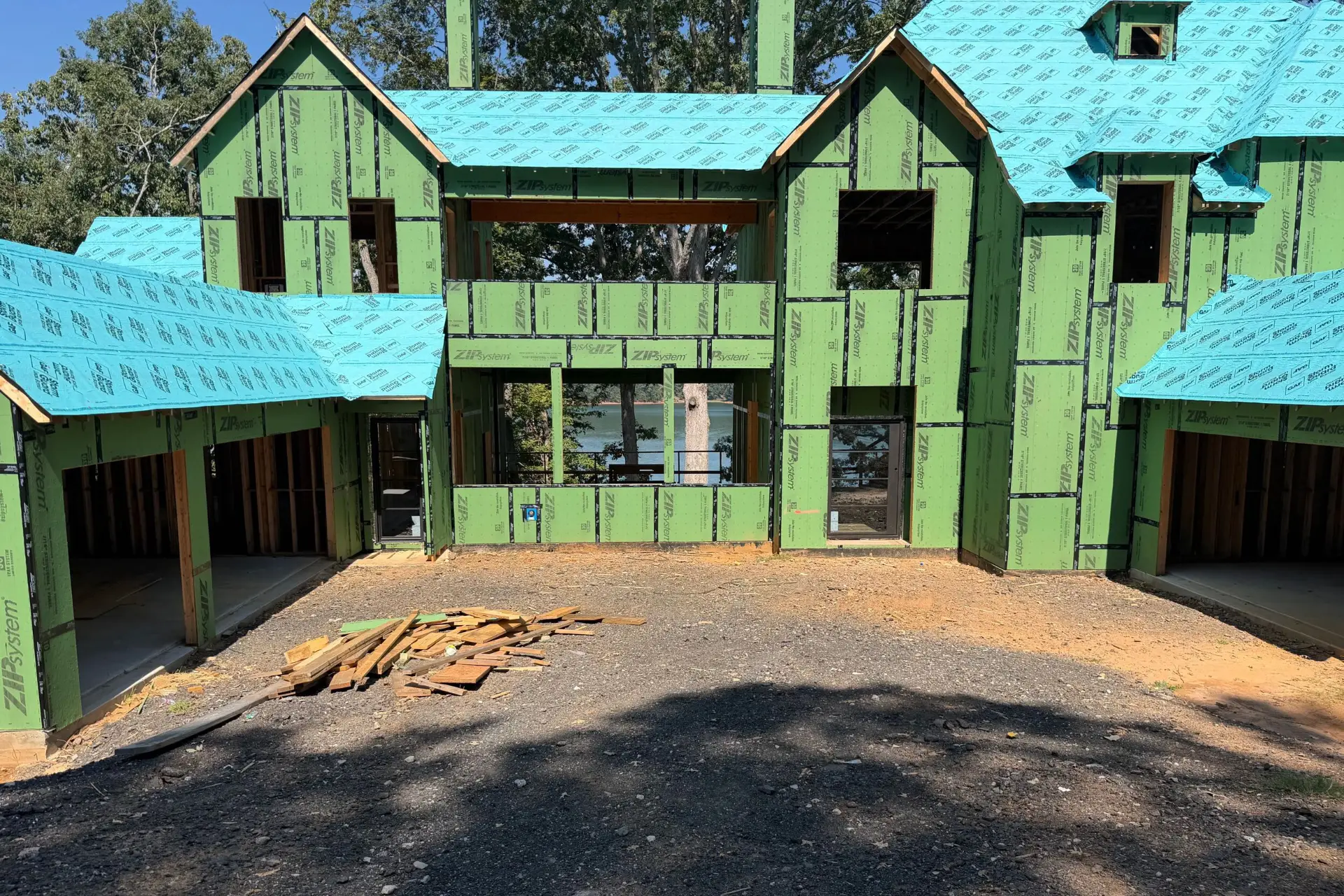
One of the most important factors is the tightness of the building envelope. A properly sealed home helps prevent humid outdoor air from entering the living space. This not only improves comfort, but also increases energy efficiency by allowing the HVAC system to operate more effectively.
Equally important is the proper sizing of the HVAC system. An oversized system may cool the home quickly, but it will not run long enough to adequately remove moisture from the air. This is known as short cycling, and it can leave the home feeling cool but still humid. A correctly sized system runs at optimal cycles, allowing for proper dehumidification and consistent indoor comfort.
As homes become tighter and more energy efficient, managing fresh air becomes essential. Controlled ventilation strategies are used to introduce fresh air into the home in a way that does not bring in excess humidity. This ensures that the home maintains healthy indoor air quality while still protecting against moisture intrusion.
Moisture management is not just about preventing problems. It is about creating a home that feels comfortable year round, maintains its quality over time, and supports a healthy indoor environment for your family.
A well designed lake home should never feel damp or humid, even in the peak of a Georgia summer. It should operate efficiently, protect its materials from moisture related damage, and provide clean, balanced air throughout the home.
Not every builder approaches lakefront construction with the level of expertise required for long term performance. Building on Lake Lanier goes beyond standard practices and calls for a deep understanding of how homes perform in high humidity environments, along with proven strategies to manage those conditions effectively. Experience plays a critical role. You want a builder who has encountered these challenges before and knows how to prevent them, not react to them.
Equally important is a strong foundation in building science and the ability to clearly explain how specific design and construction decisions will support moisture management, indoor air quality, and overall comfort. Beyond knowledge and experience, the right builder also prioritizes your best interests. That means guiding you through decisions, even when it involves protecting key components of the home that contribute to long term performance, rather than simply focusing on budget or aesthetics. Your builder should not only deliver a beautiful home, but also ensure it provides a healthy, comfortable living environment for years to come.
At Ensign Luxury Homes, we prioritize moisture management as a core part of our building process. By combining thoughtful design with building science principles, we create custom homes that are not only beautiful, but built to perform in the unique conditions of lakefront living.